
pet sitting terms and conditions
Free terms for UK pet sitters and cat sitters. Pick how you handle payment, cancellations, vets and keys, and you'll get plain-English terms in your business's name, ready to copy or print. Updated 26 October 2026.
The small print: this is a starting point written by pet sitters, not legal advice, and it hasn't been checked by a solicitor. It won't fit every business. Read every line before you use it, change what doesn't match how you work, and ask a solicitor if you're unsure. We can't accept responsibility for how you use it.
Why written terms matter
Most disagreements between pet sitters and customers come down to three things: a late cancellation, a vet's bill, and an owner who doesn't come home when they said. Agreeing the answers before the first booking means you never have to make them up on the spot with a customer you like.
Your terms should cover:
- Payment: how much is due, and when.
- Cancellations: how much notice you need, and what you charge if it's late. Christmas and the summer often get stricter rules, because you'll have turned other people away.
- Vets: permission to get a pet treated in an emergency, a spending limit, and who pays.
- Delays: what happens if the owner doesn't come home on time.
- Keys: how you keep them safe and give them back.
- What's included, so nobody's surprised by what you do or don't do.
Make your terms
Everything stays in your browser. Nothing you type is sent to us.
Terms agreed. Now the booking.
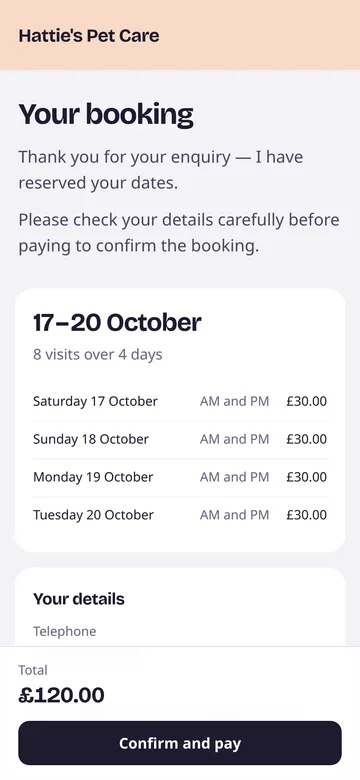
sitkit is a booking, diary and payments app for UK pet sitters, made by a cat sitter and her husband. You add the booking, and your customer gets one link with every visit, the total and a button to pay. The payment terms you've just written take care of themselves.
- Customers pay by card, Apple Pay or Google Pay, and the booking confirms itself.
- Nothing for them to download, and no account to make.
- Every visit in your diary, with the address, notes and phone number.
Then £15 a month on your own, or £30 with a team.
Using your terms
- Send them before the first booking, with your prices, and ask the customer to reply to say they agree. A message or email saying "I agree to your terms" is enough, and you can find it again later.
- Go through the vet and emergency parts at the meet and greet. Get the vet's details and an emergency contact, and ask the customer to tell their vet you're allowed to agree treatment.
- Keep the version each customer agreed to. If you change your terms, send the new ones and ask again.
- Stick to them. Terms you waive for one customer are harder to hold to for the next.
What the law decides for you
Some things apply whatever your terms say, because your customers are consumers:
- You must do the job with reasonable care and skill. That comes from the Consumer Rights Act 2015, and terms can't take it away.
- Unfair terms don't count. A term that's weighted heavily against the customer, or that's hidden or hard to understand, can't be enforced. In practice, keep cancellation charges in line with what a late cancellation really costs you. The Competition and Markets Authority's guidance on unfair terms has the detail.
- Bookings made at a distance can be cancelled within 14 days. If the booking was agreed online, by phone or by message, the customer usually has 14 days to change their mind. If they ask you to start visits sooner, they pay for the visits already done. The terms above say so.
- You can't limit your responsibility for death or injury caused by your negligence. The terms above don't try to.