
pet sitting invoice template
A free invoice for pet sitters, cat sitters and dog walkers. Fill it in below, then print it or save it as a PDF to send to your customer. Updated 26 October 2026.
Click anything with a dashed line to change it. Your details stay in this browser for next time, and nothing is sent to us.

Or skip the invoice altogether
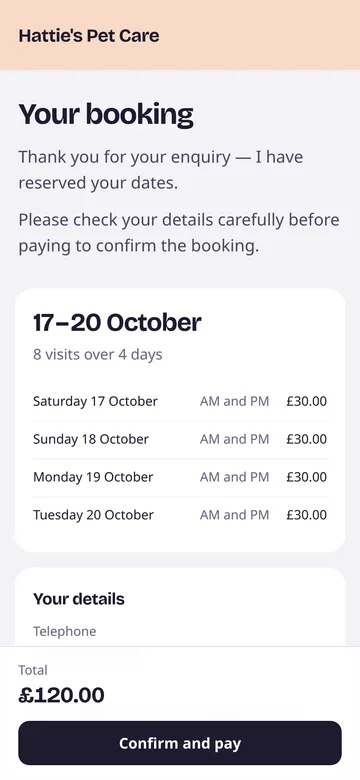
sitkit is a booking, diary and payments app for UK pet sitters, made by a cat sitter and her husband. Instead of an invoice and a bank transfer to look out for, your customer gets one link to their booking: every visit, the total and a button to pay.
- They pay by card, Apple Pay or Google Pay, and the booking confirms itself.
- If the dates change, it works out what's still to pay or what to refund.
- Nothing for them to download, and no account to make.
Then £15 a month on your own, or £30 with a team.
What a UK invoice has to show
If you're a sole trader and not registered for VAT, which is most pet sitters, GOV.UK says an invoice must include:
- a unique invoice number, going up one at a time;
- your name, any business name you use, and an address where you can be contacted;
- your customer's name and address;
- a clear description of what you're charging for, and the date you did it;
- the date of the invoice;
- the amount you're charging, and the total.
The template has a place for each. You only need to show VAT once you're registered for it, which is compulsory when your takings pass £90,000 in 12 months. GOV.UK has the full rules.
Tips for getting paid
- Invoice before the booking, not after. Most pet sitters ask for payment before the first visit. You've already got the keys, and a customer back from holiday has other things on their mind.
- Say when it's due, and agree that in your terms and conditions before the first booking.
- Put each visit on its own line, or group them by week. "6 cat visits, 3 to 8 March" is clearer than a single amount, and saves questions later.
- Keep a copy of every invoice. As a sole trader you need your records for at least 5 years after the 31 January deadline for that year's tax return.